Roof solar vs plug-in solar: why rooftop wins for most UK homes
Last updated: Written by Anthony Bushen-GarvieReviewed by a Geko MCS-certified engineer 8 min
Roof solar vs plug-in solar in one line: if you own a suitable roof, rooftop solar wins. It is usually 3–8 kW against plug-in's 800 W cap, it can have a battery for the evening, it qualifies for the Smart Export Guarantee, and it comes with a 6-year IAA insurance-backed guarantee. Plug-in solar, legal in Great Britain since 27 August 2026, is for renters and homes that can't have panels on the roof.
This comparison is by Geko Energy, an MCS-certified installer of rooftop solar, Fox ESS and Sigenergy batteries and EV chargers across England and Wales. We do not sell plug-in kits. For the plug-in safety rules, read our guide to whether plug-in solar is safe in the UK. Geko is not affiliated with Octopus Energy.
The scorecard: roof solar 7, plug-in solar 2
| Roof solar (MCS install) | Plug-in solar (DIY kit) | Winner | |
|---|---|---|---|
| Size | Usually 3–8 kW+ | Up to 800 W AC | Roof |
| Yearly generation | Often 3,000–8,000 kWh | Hundreds of kWh in good conditions | Roof |
| Battery | Fox ESS / Sigenergy hardwired storage | Not permitted as a plug-in pack | Roof |
| Evening use | Yes, with a battery | No, use it as it's generated | Roof |
| Smart Export Guarantee | Yes, with MCS certificate and export setup | Typically no | Roof |
| Design and installation | MCS-certified in-house engineers | You, after suitability checks | Roof |
| Guarantees | 25-year panel warranties + 6-year IAA insurance-backed guarantee | Product warranty from the kit maker | Roof |
| Upfront cost | Higher, for far more generation | Lower | Plug-in |
| Take it with you | No, fixed to the property | Often yes | Plug-in |
Swipe to see the full table
Rooftop size and yield vary by roof and usage. See solar panel costs in the UK.
Round 1: Generation
Roof
UK law caps a plug-in kit at 800 W of AC output, and you may only connect one per household. A rooftop system is usually 3–8 kW or more: several times the size. In good UK conditions an 800 W kit makes hundreds of kWh a year. A rooftop array often makes 3,000–8,000 kWh.
That gap is the whole story. Plug-in solar nibbles the daytime baseline: a fridge, a router, standby loads. Roof solar covers a real share of the house, and with a battery, the evening too.
Round 2: Battery and evening use
Roof
Plug-in solar is generation-only under the current UK rules. Grid-tied plug-in batteries are not permitted, so you use the electricity as it is made. If nobody is home at midday, most of it leaves the house.
A rooftop system can pair with a hardwired Fox ESS or Sigenergy battery. Daytime solar runs the evening, and on a time-of-use tariff the battery can top up overnight. Compare the options in our EV and solar tariff guide.
Round 3: Export income
Roof
With plug-in solar, surplus still flows to the grid when you make more than you use, but that is not the same as being paid for it. The obligated Smart Export Guarantee normally needs a suitably certified installation and proper export metering, so DIY plug-in kits typically don't qualify. Some suppliers run their own export deals for kits they sell; those are supplier-specific.
A rooftop system installed by an MCS-certified installer comes with the certificate and export setup you need for SEG. See our SEG guide for current rates.
Round 4: Savings
Roof
DESNZ says plug-in households could save up to around £110 a year. Octopus Energy has published roughly £50–£150 a year for its own kits. That is an Octopus estimate, and results vary with shading, orientation and how much you use in daylight.
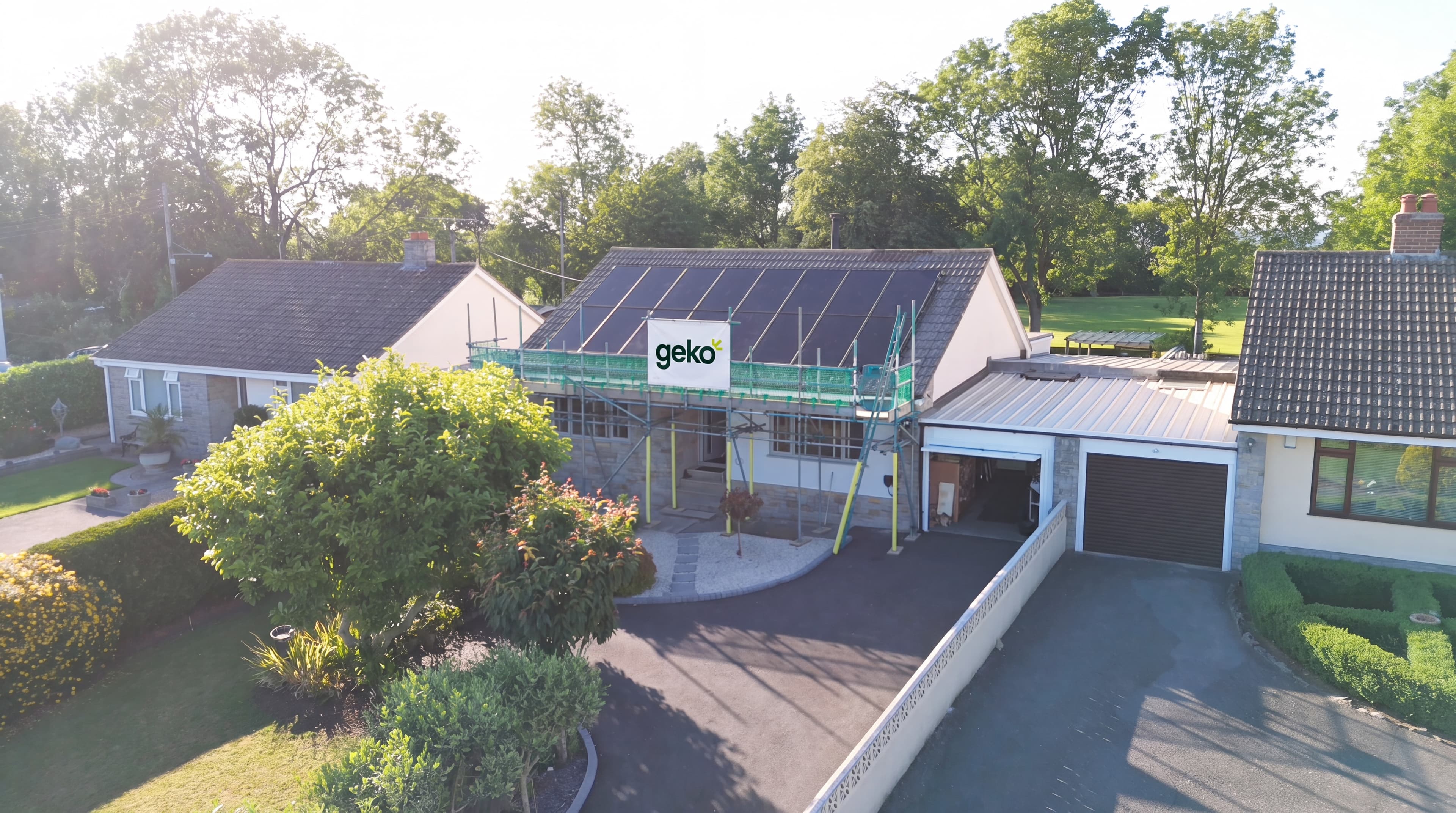
Rooftop savings scale with the system. Pete and Sarah in Somerset have 16 panels and a 12 kWh battery, and save £3,324 a year on their bills. That's their individual result, and every home is different, but it shows the gap in scale.
Round 5: Design, safety and guarantees
Roof
With plug-in solar, the checks are yours. Electrical Safety First recommends an electrician assesses the installation first, at least a Type A bidirectional RCD on the circuit, a weatherproof outdoor socket with no extension leads, and DNO notification. Our plug-in safety guide covers each step.
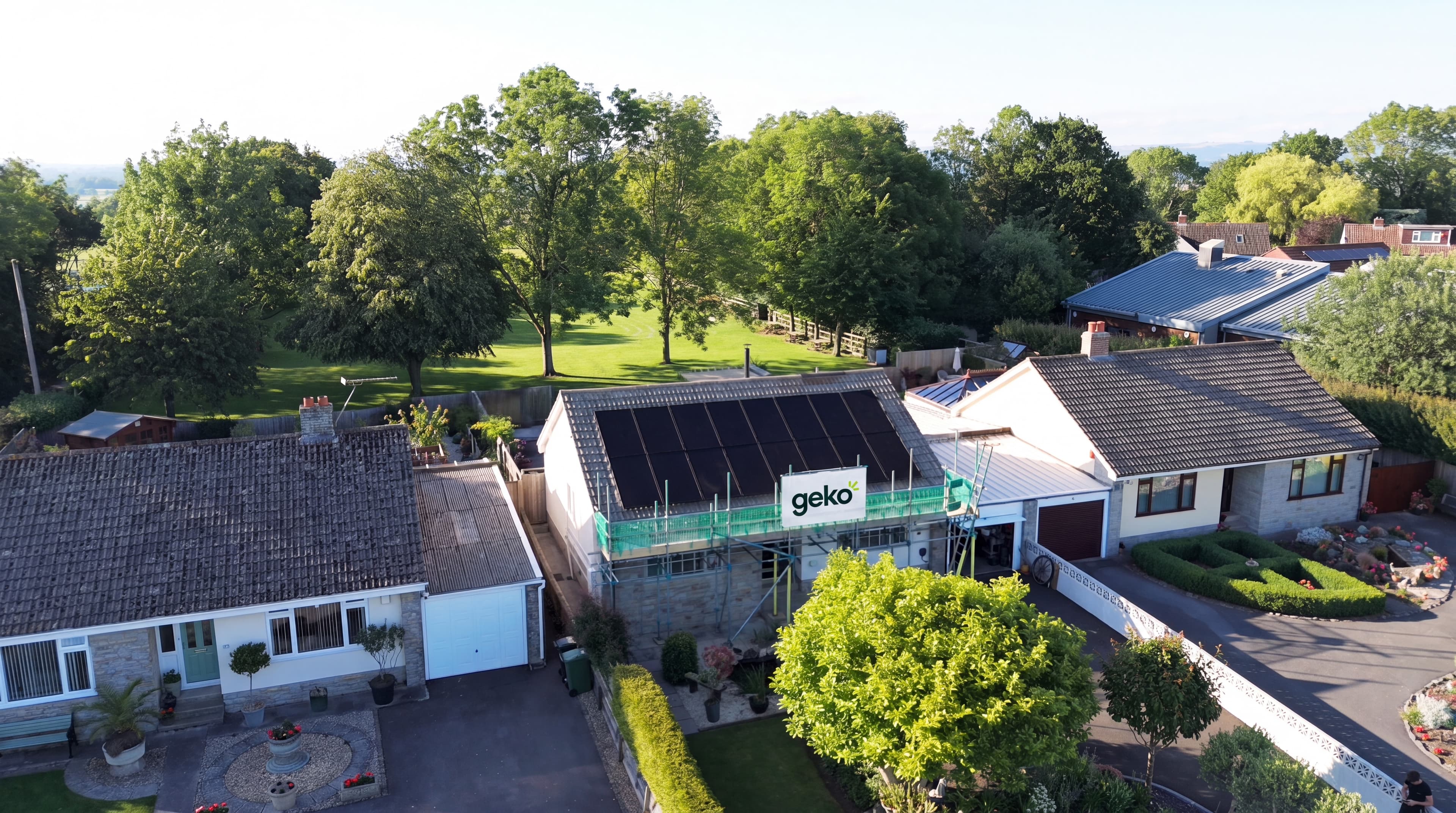
With roof solar, an MCS-certified engineer designs the system around your roof and usage, our own employed installers fit it, and we handle DNO notification and SEG registration. Panels carry 25-year manufacturer warranties, and our work is covered by a 6-year IAA insurance-backed guarantee.
Where plug-in solar wins
Plug-in solar takes two rounds, and they matter for some homes:
- Upfront cost. A small kit costs far less than a rooftop system, though it generates far less too.
- Take it with you. You can unplug it when you move, which suits renters.
- No roof needed. Some flats and balconies have no usable roof at all.
If none of those describe you, the rounds above are the ones that move a bill, and roof solar wins all of them.
How plug-in solar works, and the rules
A compliant kit is one or two outdoor panels plus a microinverter that plugs into a weatherproof outdoor socket. Your home uses the solar first; any surplus leaves through your meter. There is no hardwired connection to the consumer unit, which is why the product, socket and RCD rules matter so much.
- Step 1PanelsTurn sunlight into DC electricity
- Step 2MicroinverterConverts DC to AC, capped at 800 W
- Step 3Outdoor socketMoulded plug into a weatherproof socket; your home uses it first
- 800 W AC maximum from the microinverter, and one system per household. A second kit to “get closer to 1.6 kW” is not allowed.
- The kit must meet the Plug-in Solar Device Interim Product Specification and appear on the Energy Networks Association Connect Direct register.
- Plug directly into a suitable outdoor 13A socket. No extension leads or adapters.
- Notify your DNO as the kit instructions require, and keep a record.
- Treat shed roofs, light timber fences and flimsy railings with caution: panels are often around 20 kg each. Renters and leaseholders need landlord or freeholder permission before fixing anything to the building.
For the full checklist, read our plug-in safety guide or Electrical Safety First's advice.
Which should you choose?
Choose roof solar if:
- You own a suitable roof and want several times the generation.
- You want a battery for evenings, EVs or time-of-use tariffs.
- You want MCS certification, SEG income and long workmanship cover.
- You'd rather an engineer handles the design, installation and paperwork.
Plug-in makes sense when rooftop isn't an option:
- You rent and need something you can unplug when you move.
- You have no usable roof (some flats and balconies).
- You will complete the electrician check, buy a compliant kit, mount it securely and notify the DNO.
If you already have rooftop solar, adding a plug-in kit is a separate system and still needs DNO notification and a suitability check. Ask before you buy.
Own your roof?
How Geko installs roof solar
- Free 30-minute video consultation with an engineer, not a doorstep salesperson (no doorstep sales).
- In-house installers across England and Wales.
- Aiko and DMEGC panels; Fox ESS and Sigenergy batteries.
- MCS, TrustMark and a 6-year IAA insurance-backed guarantee.
- DNO notification and SEG registration handled with the install.
- Choosing panels? Read how to choose solar panels for a UK roof.
FAQs
Is roof solar better than plug-in solar?
- For most homeowners, yes. A rooftop system is usually 3–8 kW against plug-in's 800 W cap, can have a battery, qualifies for the Smart Export Guarantee with an MCS certificate, and comes with professional design and guarantees. Plug-in solar suits renters and homes that can't have panels on the roof.
How much more does roof solar generate than plug-in solar?
- A rooftop system often generates 3,000–8,000 kWh a year depending on size. An 800 W plug-in kit generates hundreds of kWh a year in good conditions.
Is plug-in solar legal in the UK?
- Yes, for compliant kits in Great Britain from 27 August 2026, one system per household, meeting the Interim Product Specification.
Can plug-in solar have a battery?
- Not on a grid-tied home under the current rules. If you want storage, a hardwired home battery with rooftop solar is the lawful route.
Do plug-in solar kits get Smart Export Guarantee payments?
- Typically not. The obligated Smart Export Guarantee normally needs an MCS-certified installation and export metering. Some suppliers run their own export deals for kits they sell.
How much can plug-in solar save?
- DESNZ says households could save up to around £110 a year. Octopus Energy has published £50–£150 a year for its own kits. Results vary with shading, orientation and how much you use in daylight.
Can renters use plug-in solar?
- Often yes in principle, but check the landlord or freeholder before fixing anything, and confirm the socket and mounting are suitable. For renters, plug-in solar is usually the only option.
Do I need to notify the DNO about plug-in solar?
- Yes. Follow the notification process in the kit instructions and keep a record. With rooftop solar, the installer handles DNO notification for you.
Get roof solar designed for your home
Book a free video consultation, get a quote, or call 07700 140545 (Mon–Fri, 9am–6pm).
Sources and further reading
- Legislation.gov.uk: SI 2026/848
- GOV.UK / DESNZ: plug-in solar announcement
- Electrical Safety First: plug-in solar advice and consumer PDF
- Which?: Plug-in solar panels
- Octopus Energy: Plug-in solar explained (source of the attributed £50–£150 range only)
- Geko: Plug-in overview · Is plug-in solar safe?
Geko Energy is not affiliated with Octopus Energy.