How to choose a home battery in the UK: the quote checklist for 2026
Last updated: Written by Anthony Bushen-GarvieReviewed by a Geko MCS-certified engineer 9 min
How to choose a home battery UK in one line: buy the battery that will fill up cheaply and empty usefully every day in your home. Then check that the power rating, backup, location, cold-weather behaviour, warranty small print and price per usable kWh all stack up before you sign.
Whether a battery pays off at all is covered in battery or no battery? This page is for when you have a quote (or three) in front of you.
- 01Usable capacitykWh you can draw each day
- 02Inverter powerkW in and out, and the DNO limit
- 03Power-cut backupWhat runs when the grid goes down
- 04LocationWhere PAS 63100 allows it
- 05Cold weatherCharging below 0°C
- 06WarrantyYears, capacity and throughput
- 07SoftwareTariffs, forecasts and compatibility
- 08Price per usable kWhLike-for-like value and VAT
Quick answer: the battery quote checklist
| Check | What to ask the installer | Why it matters |
|---|---|---|
| Usable capacity | “How many kWh can I actually use each day?” | The label figure is often bigger than the energy you can draw |
| Sizing | “Which part of my usage is this sized to cover?” | Capacity that never cycles is money sitting idle |
| Inverter power (kW) | “How fast can it charge and discharge, and what will the DNO allow?” | A small inverter can cap both solar output and battery discharge |
| Backup | “What exactly runs in a power cut, if anything?” | Grid-connected systems shut down in an outage unless designed to island |
| Location | “Where will it be fitted, and does that meet PAS 63100?” | Lofts, bedrooms and escape routes are ruled out |
| Cold weather | “What is the charging temperature range, and is there a heater?” | Many batteries will not charge below 0°C without heating |
| Warranty | “How many years, what capacity at the end, and is there a throughput cap?” | Whichever limit is hit first ends the cover |
| Price | “What is the price per usable kWh, with the same extras included?” | Total price alone hides big differences in value |
Swipe to see the full table
Want a second opinion on a battery quote?
1. Usable capacity and sizing
A battery's capacity is measured in kilowatt hours (kWh). The number that matters is usable capacity: the energy you can actually take out on a normal day. Systems hold some charge back to protect the cells. The Energy Saving Trust notes a system may stop discharging at a set level, for example around 20%, and should never run to zero.
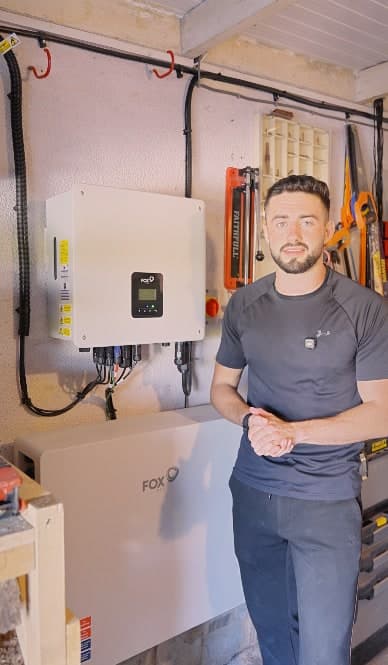
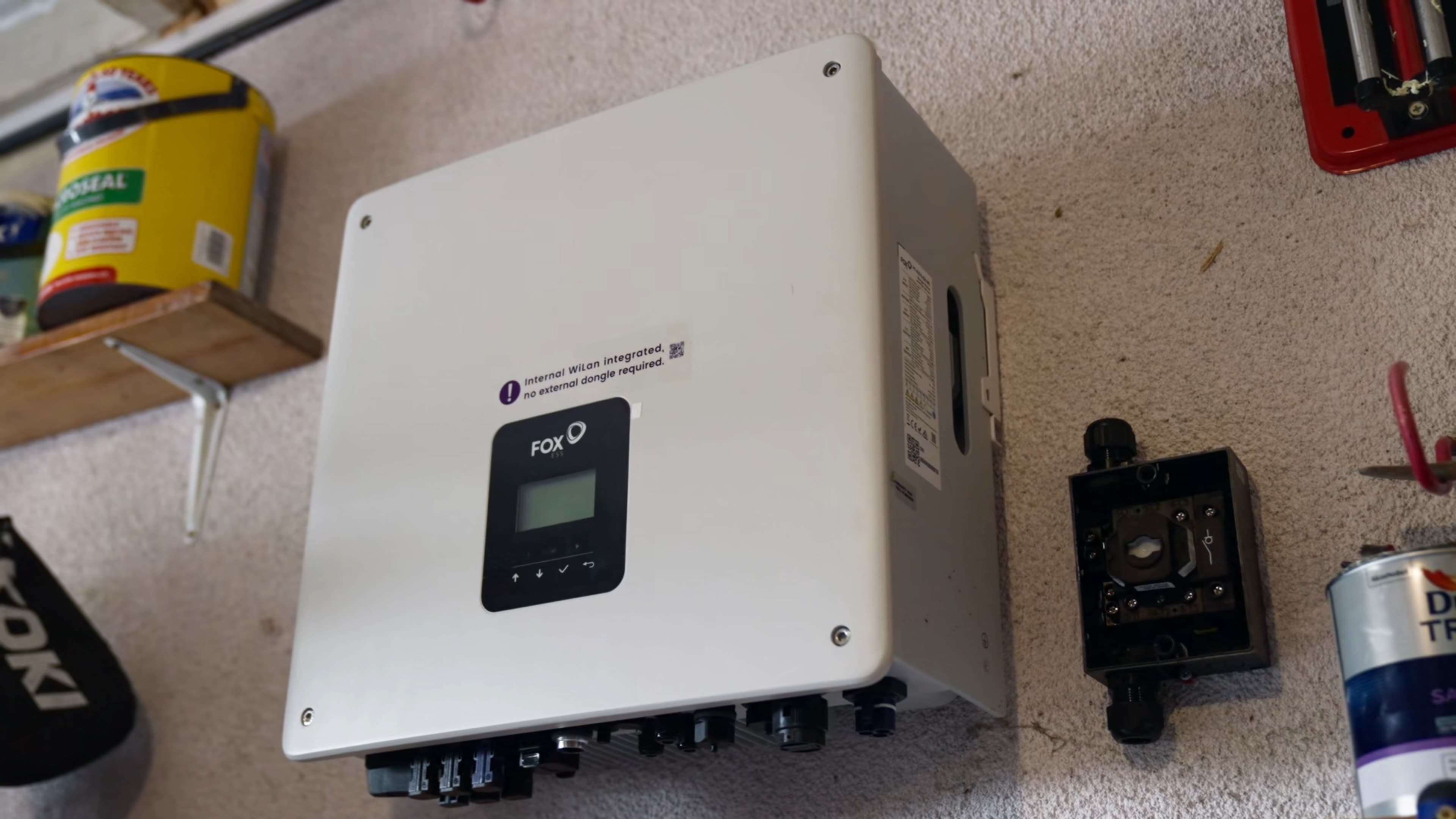
Manufacturers present this differently. Fox ESS's EP12 datasheet, for example, lists 11.52 kWh nominal energy with a 90% depth of discharge, so the everyday usable figure is a little over 10 kWh. Ask every installer to quote usable kWh so you are comparing like with like.
A battery earns its keep when it charges on cheap or free electricity (surplus solar or an off-peak rate) and then covers what you would otherwise buy at the expensive rate. As a starting point:
- Use your half-hourly smart meter data to add up what you use during expensive hours.
- Much larger than that leaves capacity idle; much smaller means buying peak-rate electricity.
- Expecting an EV or heat pump? Ask whether the system can be expanded later.
The Energy Saving Trust says a typical home system might be around 10 kWh, but there is no exact formula. It depends on your usage, tariff and solar generation.
2. Inverter power and your DNO connection
Capacity (kWh) is the size of the tank; power (kW) is how fast it fills and empties. The inverter sets that rate and, on a hybrid system, also caps how much solar power reaches your home at once.
A full battery lasts 2 h at full power.
Over 3.68 kW of total inverter capacity on a single-phase supply (solar and battery together): a G99 application before connection.
That rating is tied to your grid connection. Under the Energy Networks Association's EREC G98, generation (which explicitly includes storage) up to 16A per phase, which is 3.68 kW on a single-phase supply or 11.04 kW on three-phase, can be fitted and then notified to the network operator (DNO) within 28 days of commissioning. Anything larger follows EREC G99, which means applying before connection. As National Grid's guidance explains, a 4 kW single-phase inverter is already just over the 16A threshold.
A G99 application is no reason to avoid the right-sized system. A fast track for fully type-tested solar-plus-storage installations cuts the network operator's confirmation time from 45 days to 10 days or less; export limitation (EREC G100) is another option. Avoid an inverter chosen for paperwork convenience rather than your roof and usage.
Ask: what is the continuous charge and discharge power, and will a large solar array be limited by the inverter on bright days?
3. Power-cut backup
Many people assume a battery keeps the lights on in a power cut. By default, it does not. Grid connection rules require the system to disconnect from the grid during a power outage. This protects people working on the network.
Backup needs extra equipment that safely separates your home from the grid (islanding), and systems designed to run in island mode go through the standard G99 process rather than the fast track. Systems differ: some switch over almost instantly, others with a short gap; some cover the whole house, others a few circuits. Make sure backup hardware is on every quote you compare.
4. Where the battery will go
This check is easy to overlook. PAS 63100:2024, the BSI specification on fire protection for home batteries, says batteries should be installed outdoors where practicable. It rules out:
- rooms where people sleep, and cupboards opening into them;
- escape routes such as landings, staircases and hallways;
- lofts, roof spaces and voids;
- outdoor positions right next to doors, windows, escape routes or ventilation openings.
Can go here
- OutdoorsPreferred where practicable, away from doors, windows, escape routes and vents.
- Garage or utility roomWith fire-resisting separation, fresh-air ventilation to outdoors and interlinked fire detection.
Ruled out
- Lofts, roof spaces and voids
- BedroomsAnd cupboards that open into them.
- Landings, stairs and hallwaysEscape routes stay clear.
- Outside, right by an openingNext to doors, windows, escape routes or ventilation openings.
Indoor locations need fire-resisting separation, fresh-air ventilation to outdoors and interlinked fire detection. The Energy Saving Trust notes garages, external walls and utility rooms are common choices. Ask for the proposed position in writing.
5. Cold-weather charging
Lithium batteries dislike the cold. Fox ESS's EP12 datasheet lists a charging range of 0°C to 55°C, extended to −25°C with an optional warm-up function. Without heating, a battery in a cold garage may miss its overnight charge on a frosty night.
Ask for the charging temperature range, whether self-heating is included, and how heating affects efficiency.
6. Warranty: years, capacity and throughput
A battery warranty often has three limits:
- 1Years: often 10 or more.
- 2Retained capacity: the minimum the battery should still hold at the end (Fox ESS's UK policy guarantees at least 70% of nominal energy).
- 3Energy throughput: the total energy the battery may pass before the warranty ends. Fox ESS's policy runs for the stated years or the throughput limit, whichever comes first, and requires ambient temperature to stay between −10°C and 50°C.
Illustration (not a specific product): a battery with 10 kWh usable and a 25 MWh throughput cap, cycled fully once a day, would hit the cap after about 2,500 cycles, which is under seven years.
Try your own numbers
The cap is reached after about 2,500 full cycles: 6.8 years.
The throughput cap ends the cover first, 3.2 years before the 10-year term.
Illustrative: assumes the same usage every day. Check the exact throughput figure for the model on your quote.
A warranty is only as strong as the company behind it. MCS-certified installers must provide approved financial protection, such as an insurance-backed guarantee, on their work. Ours is a 6-year IAA insurance-backed guarantee. It does not replace the manufacturer's product warranty, so choose a manufacturer with a solid UK track record. See also our warranty traps guide.
7. Software, tariffs and compatibility
The software decides when the battery charges and discharges, so it shapes your savings. Ask whether it can:
- read your tariff automatically, including half-hourly prices;
- use weather and usage forecasts so it does not fill from the grid before a sunny day;
- show where your energy comes from and goes.
The Energy Saving Trust suggests pairing solar and a battery with a solar/battery tariff, or a good export tariff alongside a time-of-use import tariff. Compare options in our solar tariff guide and SEG explainer. If an EV or heat pump is on your list, check the battery can work with them (EV charging with solar).
8. Price per usable kWh and VAT
Divide each quote's total by its usable capacity:
| Illustrative quote | Total price | Usable capacity | Price per usable kWh |
|---|---|---|---|
| Quote A | £5,400 | 9 kWh | £600 |
| Quote B | £7,560 | 14 kWh | £540 |
Swipe to see the full table
Quote B costs more overall but less per unit of storage, if you will use that capacity daily. Include the same extras on both (backup hardware, extra modules, DNO application).
Try your own numbers
- Quote A£5,400 ÷ 9 kWh£600 per kWh
- Quote B£7,560 ÷ 14 kWh£540 per kWh
Use the usable kWh from each quote, and include the same extras in every total (backup hardware, extra modules, DNO application).
For context, the Energy Saving Trust puts battery costs at £1,500 to £10,000, and MCS reports the 2025 average battery installation cost at around £9,000. On VAT, HMRC's Notice 708/6 zero-rates batteries installed in homes (with new solar, retrofitted or standalone) until 31 March 2027, then 5% from 1 April 2027 (what that means for timing).
How Geko specifies batteries
On a free 30-minute video consultation, a Geko engineer looks at your usage, tariff, roof and any plans for an EV or heat pump. We fit Fox ESS and Sigenergy SigenStor systems alongside Aiko or DMEGC panels. SigenStor is modular, with LFP cells and a 10-year manufacturer warranty. We'll tell you if a smaller battery, or none, makes more sense.
Our own employed engineers install across England and Wales. No doorstep sales. We are MCS-certified and TrustMark-registered, add a 6-year IAA insurance-backed guarantee, and handle DNO and SEG paperwork. Call 07700 140545 (Mon–Fri, 9am–6pm).
Or see how to compare quotes you already have.
FAQs
What size home battery do I need?
Size it to the electricity you use during your expensive hours, using smart meter data. The Energy Saving Trust says a typical home system might be around 10 kWh, but there is no exact formula.
What is the difference between usable and nominal capacity?
Nominal is what the cells store; usable is what you can draw day to day. Compare quotes on usable kWh.
Will a home battery work in a power cut?
Not by default. Grid-connected systems shut down in an outage unless backup equipment islands your home. Ask exactly what will run.
Do I need DNO permission for a home battery?
Up to 16A per phase (3.68 kW single-phase) can be fitted and notified within 28 days under G98; larger systems need a G99 application first. Your installer should handle this.
Can a battery go in my loft?
No. PAS 63100 rules out lofts, roof spaces, bedrooms and escape routes. Outdoors is preferred, or a suitably separated indoor space such as a garage.
How long do home batteries last?
The Energy Saving Trust puts typical lifespan at about 10 to 12 years.
Is there VAT on home batteries?
For qualifying residential installs, the zero rate runs to 31 March 2027, then 5% from 1 April 2027, per HMRC Notice 708/6.
Should I get more than one quote?
Yes. The Energy Saving Trust recommends at least three quotes from MCS-certified installers. Check battery storage certification on MCS's Find an Installer tool. You can start with Geko's free video consultation.
Get a battery sized for your home
A free 30-minute video consultation with one of our engineers, then one total price with the exact battery, inverter and warranty terms on it.
Phone lines open Mon–Fri, 9am–6pm
Sources
- Energy Saving Trust: Battery storage
- Energy Saving Trust: Best tariffs for renewable technologies
- MCS: Battery storage for consumers
- MCS: Find an Installer
- Energy Networks Association: Distributed Generation Connection Guide, G98 for Single Premises
- National Grid Electricity Distribution: Micro generation (G98) and G99 connection procedures
- GOV.UK: Register energy devices in homes or small businesses
- BSI: PAS 63100:2024, protection against fire of battery energy storage systems for use in dwellings
- GOV.UK: VAT Notice 708/6
- The IAA: MCS approved financial protection
- Fox ESS: EP12 datasheet and UK battery warranty policy (opened November 2026)
- Geko Energy: Sigenergy SigenStor, battery or no battery?, MCS explained
Geko Energy designs and installs solar PV, battery storage and EV charging. We are not affiliated with battery manufacturers beyond the products we specify. Datasheet and warranty terms change, so we confirm the exact model and terms on your quote. Illustrative figures are examples, not quotes.