How the Iran conflict is affecting UK energy prices
Last updated: Written by Anthony Bushen-Garvie 6 min
Your energy supplier doesn't really decide what you pay. Foreign policy does.
The short version
- Since 28 February 2026, the conflict with Iran has largely blocked the Strait of Hormuz, the route for about a fifth of the world's oil.
- European gas rose about 50% in a week and 60% to 70% across March. The UK buys from the same market.
- Ofgem's price cap rose 13% in July and 4% in October, to £1,723 a year for a typical home.
- The next cap is announced on 25 November. Forecasts have it rising 16% to 27% from January.
What's happened in the Strait of Hormuz
The Strait of Hormuz is a narrow stretch of water between Iran and Oman. About a fifth of the world's oil passes through it, along with a large share of the world's liquefied natural gas from Qatar.
Since US and Israeli strikes on Iran on 28 February 2026, Iran has largely blocked it. In the weeks that followed, tanker traffic carrying crude fell by around 95% and LNG shipments by around 99%. A ceasefire in April and a US-Iran agreement in June each reopened it briefly. Neither held. The truce broke down on 8 July after Iran struck commercial ships.
Why a strait in the Gulf reaches your bill
Britain buys gas from the same international market as the rest of Europe. When supply through Hormuz stopped, buyers competed for what was left. European gas prices rose about 50% in the first week, from about €31 to €45 per megawatt hour, and ended March up 60% to 70%. That was the biggest monthly rise since September 2021.
It doesn't stop at gas. Gas power stations often set the wholesale price of electricity in Britain, so when gas gets dearer, so does electricity. Ofgem then builds those wholesale costs into the price cap, using prices from a fixed window a few months before each cap starts.
What it's done to the price cap
Ofgem put the cap up 13% in July, then again in October. Your supplier didn't choose that. A standoff thousands of miles away did.
| Period | Typical household, a year | Change |
|---|---|---|
| Apr–Jun 2026 | £1,641 | |
| Jul–Sep 2026 | £1,663* | +13% |
| Oct–Dec 2026 | £1,723 | +4% |
| Jan–Mar 2027 (forecast) | £1,999 to £2,185 | +16% to +27% |
Dual fuel, direct debit. *From 1 July 2026 Ofgem lowered its typical-use figures, so the cap fell to £1,663 on the new basis. On the old basis it would have been about £1,862, which is the 13% rise. The January figures are forecasts until Ofgem announces them.
In July, gas rose far faster than electricity: about 24% against 5%. Both went up, and neither had anything to do with how well your supplier runs its business.
Timeline: from Ukraine to Hormuz
If this sounds familiar, it should. The same thing happened after Russia invaded Ukraine in 2022. Filter the timeline to compare the two.
- Ukraine 2022
Russia invades Ukraine
Europe's gas market, already tight after the pandemic, prices in the risk to Russian supply.
- Ukraine 2022
Price cap rises 54%£1,971
Ofgem's cap for a typical household goes from £1,277 to £1,971 a year.
- Ukraine 2022
Government steps in with the Energy Price Guarantee£2,500
Ofgem's cap would have been £3,549. The government's Energy Price Guarantee limits a typical bill to £2,500 instead.
- Iran 2026
US and Israeli strikes on Iran; the Strait of Hormuz is largely blocked
About a fifth of the world's oil normally passes through the strait, along with a large share of the world's liquefied natural gas.
- Iran 2026
European gas jumps about 50% in a week
Average European gas prices rise from about €31 to €45 per megawatt hour in the first week of the escalation.
- Iran 2026
Biggest monthly rise since 2021
The European benchmark gas price ends March up 60% to 70%, its biggest monthly increase since September 2021.
- Iran 2026
Temporary ceasefire, but the strait stays effectively closed
Iran limits the number of ships crossing and charges tolls reported at over $1 million a vessel.
- Iran 2026
Ofgem announces a 13% rise from July+13%
The cap for July to September rises 13%. Gas rises far more than electricity.
- Iran 2026
A US-Iran agreement briefly reopens the strait
Commercial traffic restarts on 18 June. Two days later, Iran declares the strait closed again.
- Iran 2026
July price cap takes effect£1,663
Ofgem also lowers its typical-use figures, so the new cap is £1,663 a year. On the old basis it would be about £1,862.
- Iran 2026
The truce breaks down
Iran strikes commercial ships in the strait. By mid-July, attacks are at their highest level since April.
- Iran 2026
Wholesale prices hit a four-year high
The spike lands inside the window Ofgem uses to set January's cap, so analysts say the rise is already locked in.
- Iran 2026
Price cap rises again+4%
The cap for October to December is £1,723 a year for a typical household.
- Iran 2026Coming up
Ofgem announces January's price cap+16% to +27%
Forecasts range from about £1,999 (Cornwall Insight) to £2,185 a year for January to March 2027.
What you can control
None of us can control what happens in the Gulf, or in Ukraine. But there is one thing you can do. The power from panels on your roof doesn't come through a strait or a pipeline.
- Solar cuts what you buy. Every kWh your panels supply is one you don't buy at whatever the cap says that quarter.
- A battery stretches it into the evening. Store daytime solar and use it after dark, when you'd otherwise be buying from the grid.
- A smart tariff covers the rest. Fill the battery overnight at a cheap rate when the next day looks dull. Our guide to EV and solar tariffs compares the options.
It won't make you immune to the economic shockwave of war. Solar covers electricity, not gas heating, and you still pay standing charges. But it will ringfence how much of your bill a war can touch.

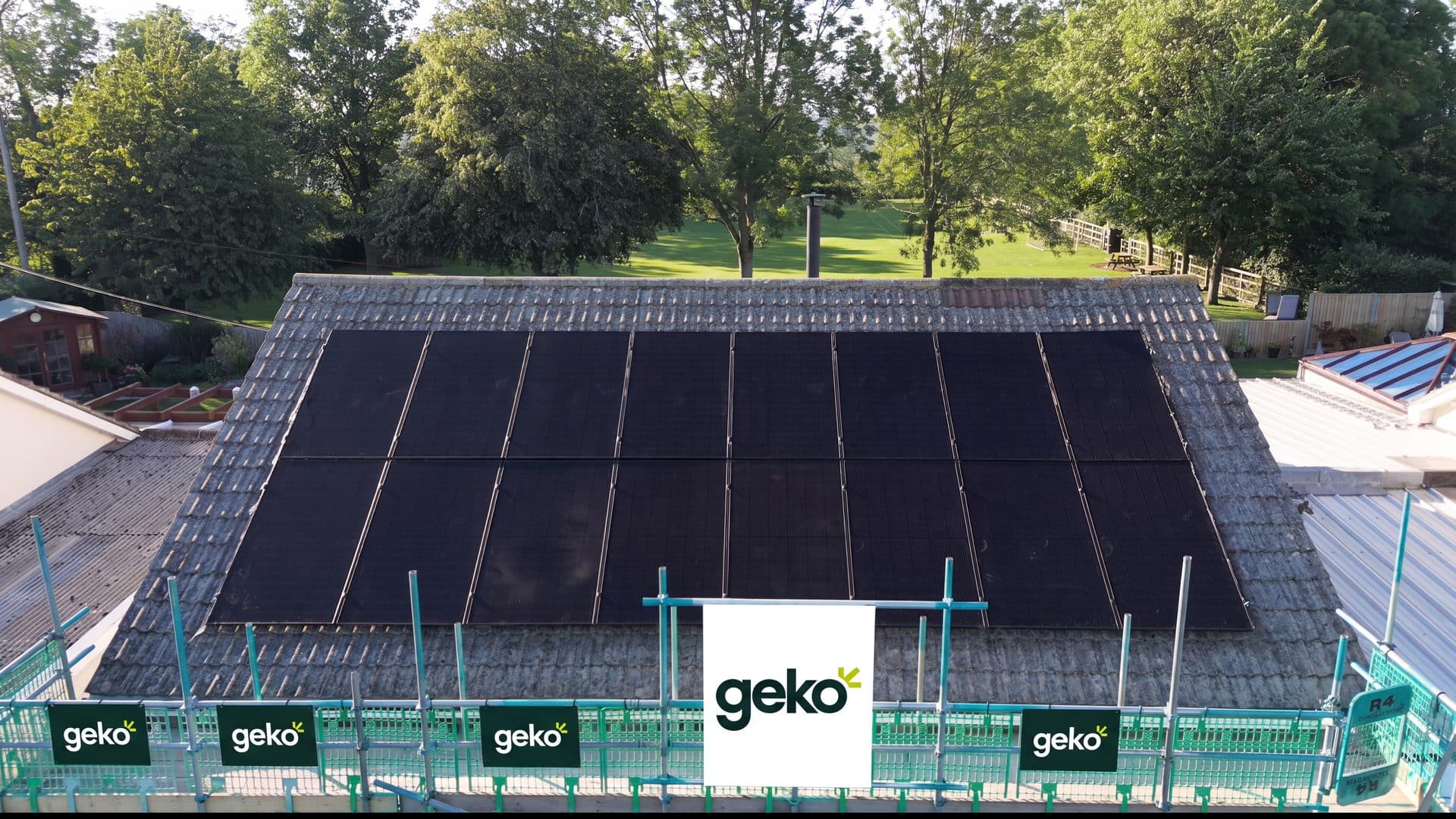
A real Geko install: Pete and Sarah in Somerset have 16 panels and a 12 kWh battery, and save £3,324 a year on their bills. That's their individual result. Solar and battery installs completed by 31 March 2027 also carry 0% VAT.
See how much of your bill solar could ringfence.
Get my free solar quoteWhat happens next
Ofgem announces the next price cap on 25 November, for January to March 2027. Cornwall Insight forecasts a 16% rise, to about £1,999 a year. Other forecasts go as high as £2,185, a rise of about 27%. Wholesale prices hit a four-year high in early September, inside the window Ofgem uses for January, so analysts expect most of that rise to be locked in.
We'll break it down here when it lands.
Iran conflict and UK energy prices: FAQs
- Why are UK energy prices going up in 2026?
- Mainly because of the conflict with Iran. Since 28 February 2026 the Strait of Hormuz has been largely blocked, which pushed up oil and gas prices across Europe. The UK buys from the same wholesale market, and Ofgem's price cap follows wholesale costs.
- Does the Iran conflict affect UK electricity prices as well as gas?
- Yes. Gas power stations often set the wholesale price of electricity in Britain, so dearer gas means dearer electricity too. In July's cap, gas rose much faster than electricity, but both went up.
- When is the next energy price cap announced?
- Ofgem is due to announce the cap for January to March 2027 on 25 November 2026.
- How much will the price cap rise in January 2027?
- Forecasts range from about 16% (Cornwall Insight, around £1,999 a year) to 27% (around £2,185) for a typical household. The figure isn't confirmed until Ofgem announces it.
- Can solar panels protect me from energy price rises?
- They won't make you immune, but they reduce how much electricity you buy from the grid. Power from your own roof doesn't depend on a shipping lane or a pipeline, so less of your bill moves when wholesale prices do. A battery lets you use more of that solar in the evening.
About the author
Anthony Bushen-Garvie
Anthony runs marketing at Geko Energy. He holds certifications in economics, is a member of the Financial Communications Society and is a former contributor to the Geopolitical Pivot Podcast.
Take part of your bill out of the headlines
Book a free 30-minute video consultation with one of our engineers. We'll look at your roof, your bills and your usage, and give you one total price for a solar and battery system designed for your home. No doorstep sales.
Figures as reported up to 5 November 2026 and may change. Price cap figures are Ofgem's for a typical dual-fuel household paying by direct debit. Forecasts are not confirmed until Ofgem announces them.
Sources
- Energy price cap will rise by 13% from July, Ofgem, 27 May 2026
- Energy price cap October 2026: Ofgem confirms 4% increase, Uswitch
- Shipping and the Strait of Hormuz, House of Commons Library
- 2026 Iran war, Britannica
- Gas Market Report, Q2 2026, International Energy Agency
- European gas prices in March 2026, Trading Economics
- The Strait of Hormuz since the June agreement, Al Jazeera, 9 July 2026
- Cornwall Insight price cap forecast for January to March 2027, 30 September 2026